The visual language of classic interior design often overlaps between high-end private residences and luxury hotels, yet the engineering that dictates the underlying structure differs fundamentally. While a private estate prioritizes aesthetic exclusivity and personal comfort, hospitality projects are governed by rigorous safety codes, liability mitigation, and extreme durability requirements. Manufacturers like Modenese Interiors bridge this gap by adapting artisanal craftsmanship to meet industrial-grade standards without compromising visual integrity.
1. Durability Standards and Abrasion Resistance
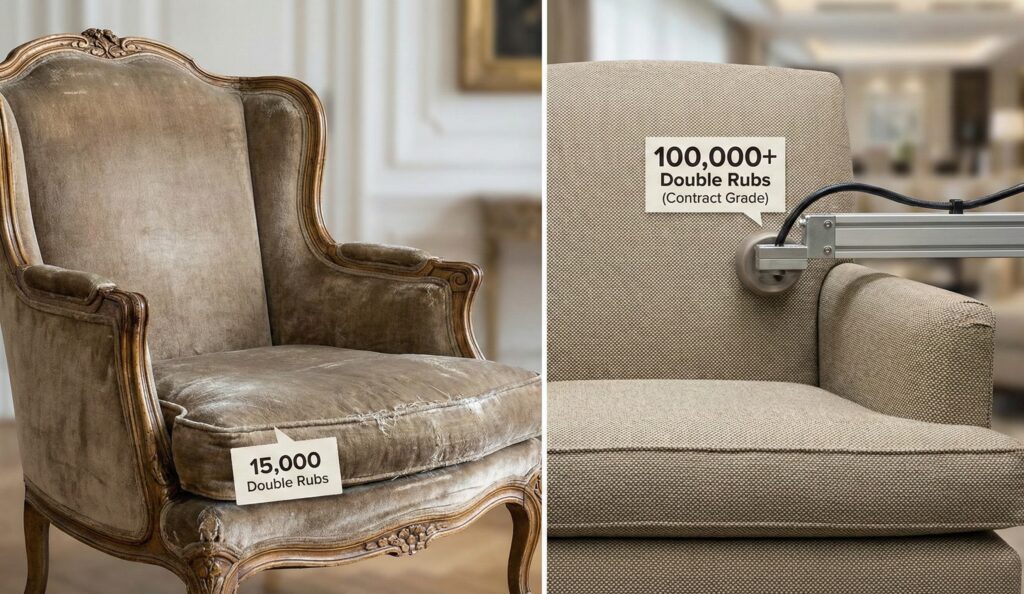
The primary divergence lies in the anticipated traffic load. Residential furniture is engineered for intermittent use by a known set of occupants. Hospitality furniture must withstand continuous, abusive use by anonymous guests. This difference is quantifiable through standardized abrasion testing.
Fabric Performance Metrics
In residential settings, upholstery fabrics are typically subjected to the Martindale or Wyzenbeek tests to measure their wear resistance. A standard residential rating might fall between 15,000 and 25,000 double rubs. Conversely, hospitality specifications require a minimum of 30,000 double rubs for light commercial use, scaling up to 100,000+ for high-traffic lobbies and casinos.
When specifying italian fabrics for contract projects, designers must verify high-performance ratings alongside aesthetic value. The Association for Contract Textiles (ACT) provides voluntary performance guidelines that serve as the industry benchmark.
| Specification | Private Residential Standard | Hospitality/Contract Standard |
|---|---|---|
| Abrasion (Wyzenbeek) | 15,000 – 25,000 Double Rubs | 30,000 – 100,000+ Double Rubs |
| Pilling (ASTM D3511) | Class 3 | Class 4 or 5 |
| Seam Slippage (ASTM D4034) | 25 lbs | 40 lbs minimum |
2. Fire Safety Codes and Flammability
Regulatory compliance regarding flammability is non-negotiable in the hospitality sector. Private residences in the United States generally adhere to TB 117-2013, which addresses smolder resistance. However, this standard is insufficient for public spaces.
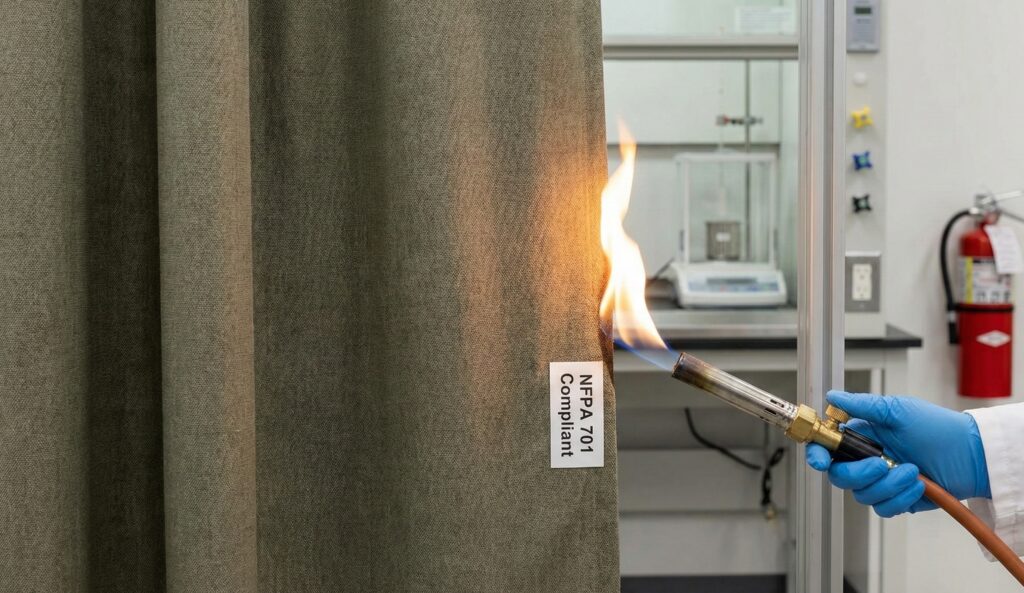
Hotels and public venues often fall under stricter jurisdictions requiring compliance with NFPA 701 (for drapery and vertical hangings) or CAL 133 (for seating furniture in public buildings). These tests simulate open flame exposure rather than simple cigarette smoldering. Failure to adhere to these codes exposes the property developer and operating brand to catastrophic liability. Modenese Interiors utilizes specialized fire-retardant barriers and treated substrates to meet these codes while maintaining the tactile quality of the furniture.
3. Structural Integrity and Construction Methods
The internal architecture of contract furniture differs from residential pieces to ensure longevity under stress. The Business and Institutional Furniture Manufacturers Association (BIFMA) sets the gold standard for testing the structural durability of furniture.
- Joinery: Residential pieces may rely on dowels and glue. Contract pieces frequently utilize double-doweled, mortise-and-tenon joints reinforced with corner blocks and industrial-grade adhesives to prevent racking.
- Foam Density: Residential cushions often use 1.8 lb/ft³ density foam. Hospitality specifications demand High Resiliency (HR) foam with densities exceeding 2.5 lb/ft³ to prevent deformation after thousands of compression cycles.
- Finishes: Contract finishes must resist chemical cleaners and alcohol. Catalyzed lacquers or conversion varnishes are applied to create a non-porous surface, distinct from the hand-waxed or shellac finishes found in antique residential restorations.
4. Repeatability and Scalability in Manufacturing
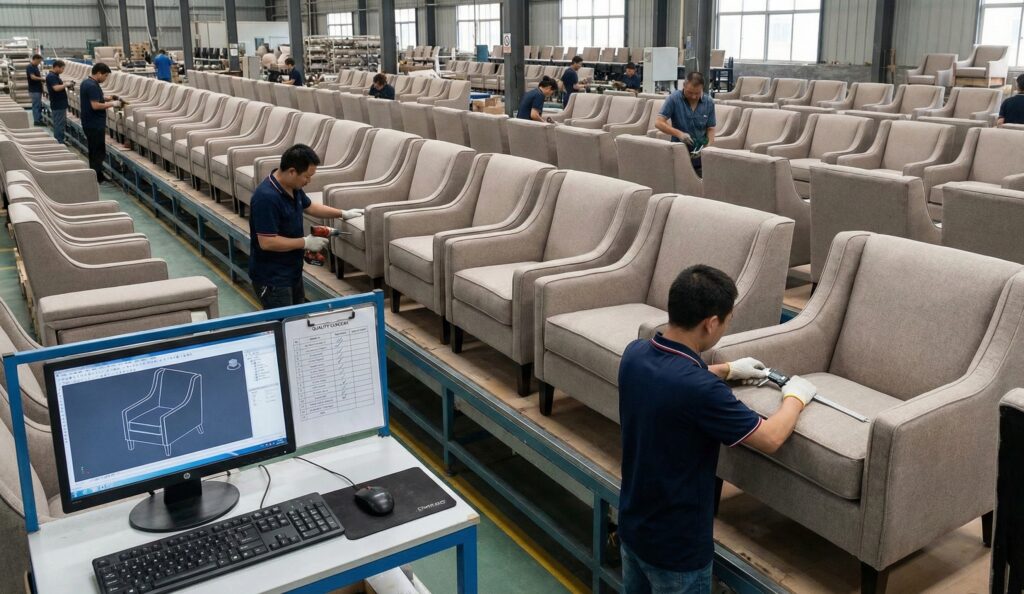
Private residential projects often involve bespoke, one-off pieces where minor variations are celebrated as evidence of handcrafting. In contrast, hospitality procurement demands strict repeatability. If a hotel orders 300 armchairs for guest rooms, each unit must be identical in dimension, finish, and upholstery alignment to ensure operational consistency.
This requirement necessitates the combination of Computer-Aided Manufacturing (CAM) precision and skilled labor. Brands like Modenese Interiors employ rigorous quality control protocols to ensure that the 300th chair matches the prototype exactly, minimizing installation delays and maintenance discrepancies.
5. Certification and Liability
Product liability coverage dictates that contract furniture must be certified for its intended use. Using residential-grade furniture in a commercial environment often voids warranty claims and insurance policies. Procurement agents require documentation such as Certificates of Flame Retardancy (CFR) and lab test results for abrasion and stability prior to purchasing.
For global projects, understanding regional differences is critical. While the US relies on NFPA and CAL standards, European projects may reference ISO 8191. Professional specifiers act as the filter, ensuring that every element, from the structural frame to the outer textile, complies with the local safety infrastructure.