
A sofa may look right beneath the largest window, yet a strip of afternoon sun crossing one cushion can make the safer position clear. Before moving the room around, tape that sunlight boundary on the floor and build the layout from measured exposure rather than decorating instinct. The result is a workable seasonal arrangement that protects useful furniture without turning the sunroom dark.
How do you map sunlight, glare, heat, and HVAC exposure in a sunroom?
A sound sunroom furniture layout begins with an exposure map made over one clear day, then checked in another season. Mark direct sun, reflected glare, warm glazing, supply airflow, and return paths before placing upholstery, veneer, shellac, or glued joints.
A one-day sunroom exposure survey reveals where furniture is at risk
- Sketch the room on graph paper. Measure windows, doors, registers, walkways, and furniture footprints.
- Check the room in the morning, around midday, and late afternoon. Mark direct-sun boundaries with low-tack painter’s tape. A line crossing one sofa cushion warns of uneven exposure across a matched set.
- Mark DS for direct sun, BI for bright indirect light, G for glare, and W for warm glazing. Add arrows for supply air and dashed arrows for return paths.
- Sit in every intended chair. Check windows, screens, book pages, and polished tabletops at seated eye height. Hold a hand near, but not against, warm glass and in register airflow to trace the affected zones.
A seasonal sunroom check catches exposure that the first survey misses
The map applies to that date, weather, orientation, latitude, exterior shade, and nearby surroundings. Repeat it near the opposite solstice and after leaf drop or changes to awnings and window coverings. The NPS collections-environment guidance, written for museums and furnished historic structures, likewise accounts for different climates and building types and includes guidance on limiting air pollution.
Once the risky zones are fixed on paper, rank the furniture by what light and heat can do to its materials.
Sunroom furniture materials should be ranked by their sensitivity to light and heat
Place hard-to-replace and poorly lightfast materials in the lowest-exposure zones, then identify each textile, finish, veneer, foam, and adhesive before consulting its maker’s care instructions.
Upholstery dye lots and lightfastness determine where sunroom seating belongs
The AATCC develops textile-evaluation standards used in industry specifications. Ask a fabric supplier for the named lightfastness method, such as AATCC TM16 or ISO 105-B02, along with the rating, exposure conditions, and intended use. Fade resistant is not fade proof, and a replacement cover may reveal a different dye lot.
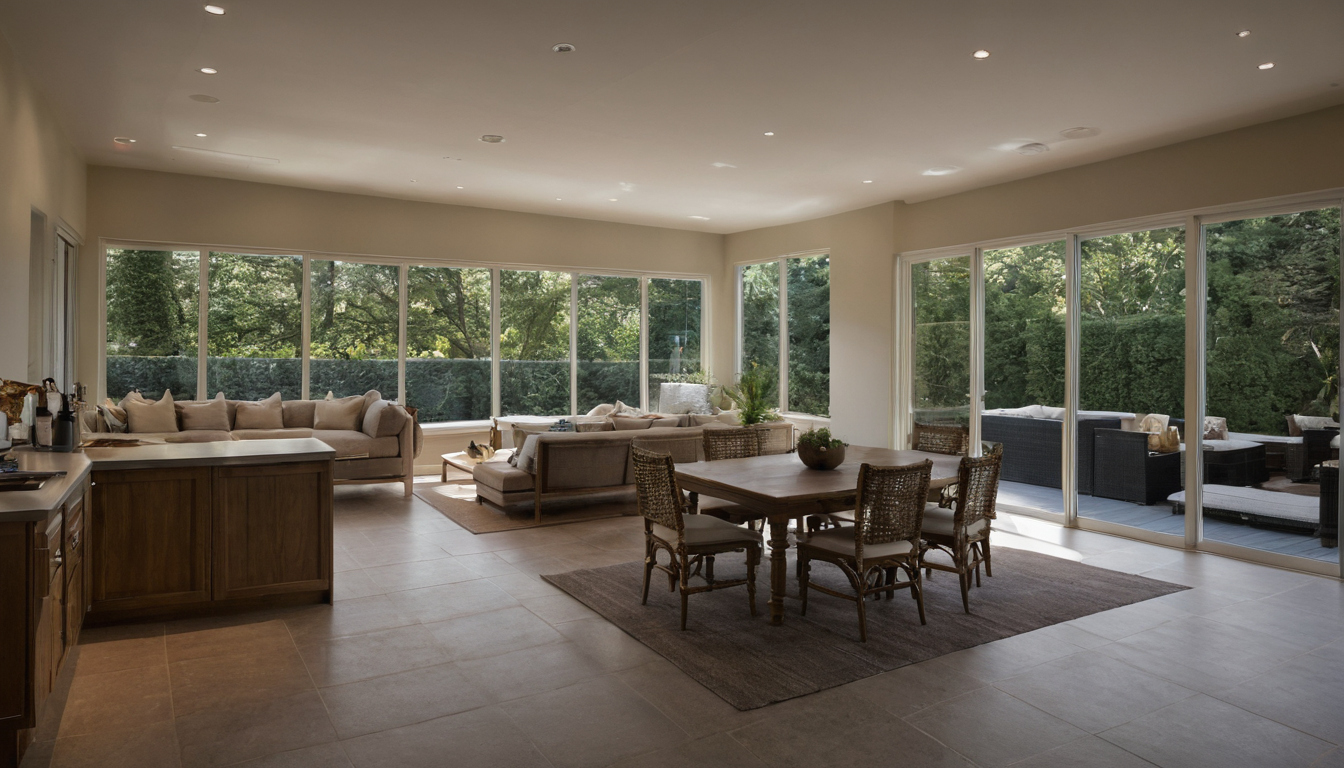
Sunroom furniture materials should be ranked by their sensitivity to light and heat shown with floor, wall, and fixture relationships visible.
| Material | Concern | Warning sign | Preferred zone | Weekend action |
|---|---|---|---|---|
| Dyed upholstery | Uneven fading | Pale window side | Low light | Compare cushion faces |
| Solution-dyed textile | Gradual change | Uneven tone | Filtered light | Check test rating |
| Leather | Drying and color shift | Stiffness | Cool shade | Follow maker care |
| Solid wood | Movement and color change | Open joint | Stable zone | Inspect joints |
| Veneer | Glue-line failure | Lifted edge | Stable shade | Check edges |
| Shellac or clear finish | Heat and light change | Clouding or ambering | Cool indirect light | Compare a covered area |
| Laminate | Adhesive stress | Raised seam | Moderate temperature | Inspect seams |
| Cushion foam | Heat aging | Sagging or crumbs | Cool seating zone | Unzip and inspect |
| Glued assembly | Joint failure | Wobble | Stable conditions | Test gently |
Veneer, shellac, clear finishes, and adhesives require stable sunroom conditions
The NPS Conserve O Gram catalog lists guidance on organic objects, ultraviolet-filtering films, temperature, and relative-humidity monitoring. The broader NPS Museum Handbook addresses preservation across many materials, including updated light standards and object rotation. These are conservative museum references, not residential warranties, but the principle suits matched cushions and finished tabletops.
Condensation deserves attention too. The EPA advises fixing damp spots promptly. If weekend work involves varnish, wax, or another VOC-emitting product, the EPA recommends increased ventilation during use. For evening task light, ENERGY STAR states that qualified LEDs use at least 75 percent less energy and last up to 25 times longer than incandescent bulbs. Finally, compare residential and higher-duty furniture specifications before treating all performance fabrics alike.
A measured sunroom furniture layout assigns each piece to the safest usable zone
Assign space in this order: material vulnerability, intended activity, circulation, and equipment safety. Door operation, walkways, emergency access, and appliance clearances remain non-negotiable.
Sunroom sofas and upholstered chairs belong outside the longest direct-sun path
- Narrow room: Tape the sofa footprint along the shaded long wall and preserve the opposite passage.
- Square conversation room: Put the sofa in the safest zone and keep matched chairs under comparable exposure.
- Rotate reversible cushions only when the maker permits it. A slipcover can take wear, but it cannot be assumed to stop fading.
No universal setback from ordinary glass guarantees protection. Glass construction, orientation, shade, climate, and exposure duration all affect placement.
Sunroom reading chairs need low glare at seated eye level
Tape the chair footprint and sit with the actual book or tablet during normal reading hours. If glare remains, turn the chair perpendicular to the glass, move the lamp, add an adjustable shade, or relocate the chair.
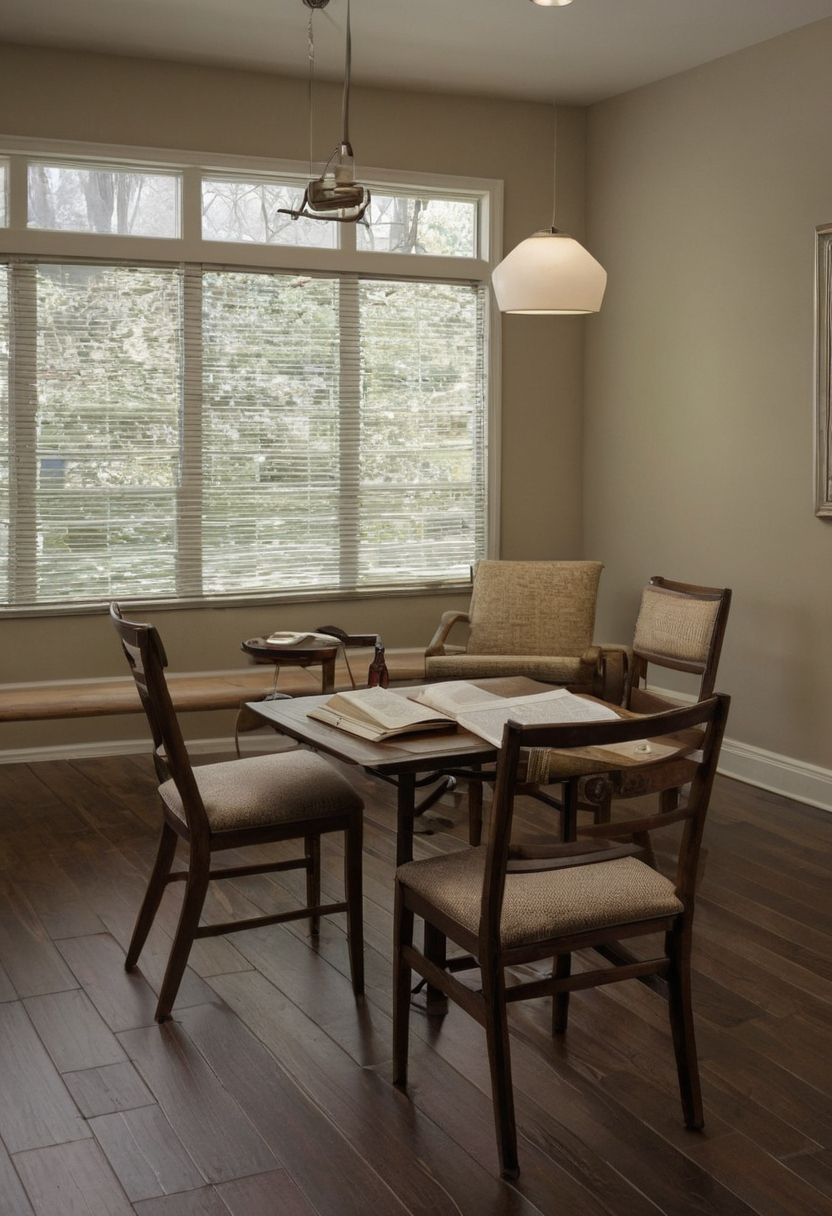
A measured sunroom furniture layout assigns each piece to the safest usable zone shown with floor, wall, and fixture relationships visible.
Sunroom tables and wood case pieces need room for joints and finishes to remain stable
Keep veneered tops, shellac, drawers, and glued joints away from direct sun, warm glazing, condensation, and supply discharge. Museum guidance sometimes moderates fluctuations with sealed metal cabinets, but that collection-storage measure is not a substitute for controlling an occupied room.
For dining use, mark the table footprint with cardboard and calculate dining-chair pullback and leaf space. Then check the revised layout against doorways and walkways. If the safe zone still suffers from glare or heat, choose window controls by specification.
Window treatments can reduce sunroom exposure only when their specifications match the problem
Match the treatment to direct sun, glare, solar heat, ultraviolet transmission, or privacy. Shades, curtains, exterior screens, and films do different work, so a dark tint alone does not prove furniture protection.
| Problem | First control to consider |
|---|---|
| Direct beam on upholstery | Interior shade or lined curtain |
| Changing glare | Adjustable shade or solar screen |
| Solar heat reaching the glass | Exterior awning or solar screen |
| Broad furniture exposure | Compatible film plus an adjustable covering |
Visible-light transmission and solar heat gain describe different sunroom window-film effects
Visible transmittance describes how much visible light passes through glazing. Solar heat gain coefficient describes how much incident solar energy enters as heat. Neither figure alone proves fade protection because ultraviolet radiation, visible light, heat, exposure time, dyes, and finish chemistry can contribute.
Compare film data only for matching glazing and test conditions. Check the data sheet, glass construction, window warranty, installation limits, ultraviolet claims, visible-light transmission, solar performance, and exclusions before applying aftermarket film.
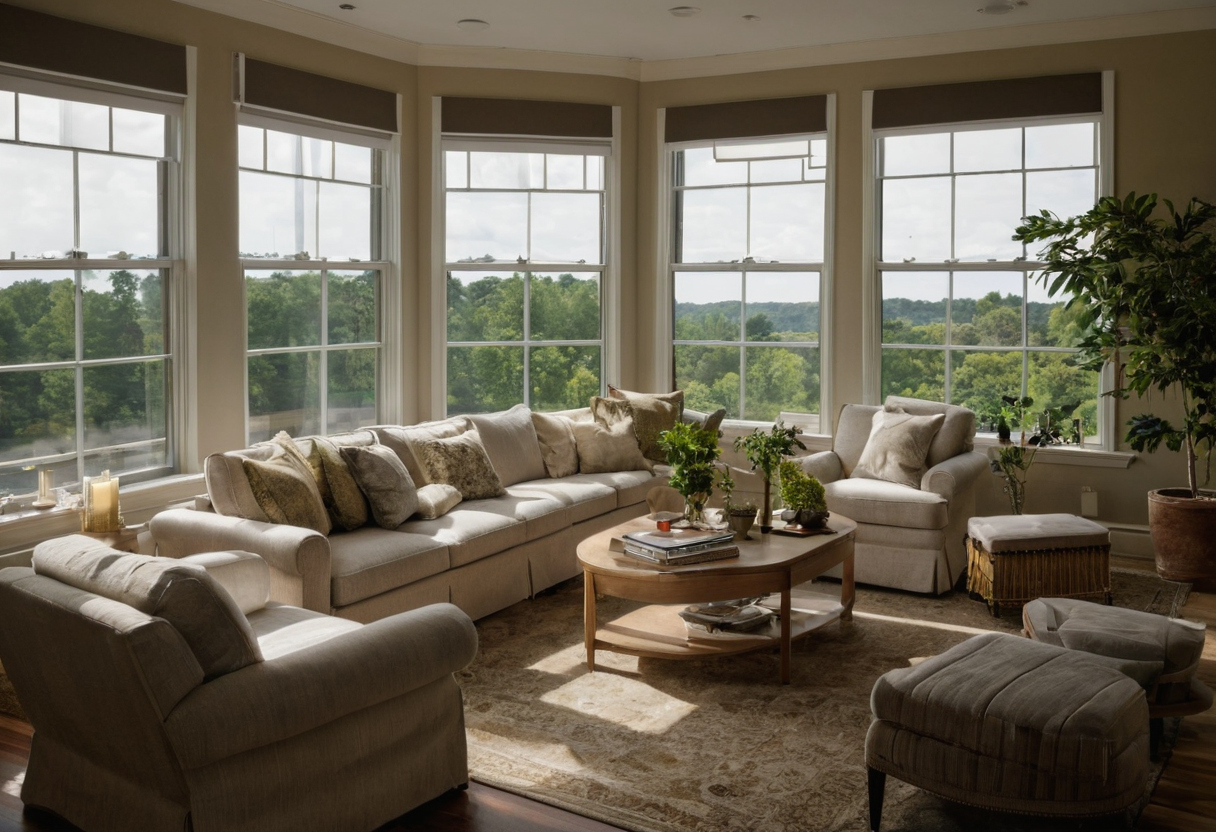
Window treatments can reduce sunroom exposure only when their specifications match the problem shown as an editorial reference for proportion and finish coordination.
Adjustable sunroom shades control changing glare better than a fixed furniture move
Close a shade when the surveyed beam reaches a cushion or glare reaches seated eye height, then reopen it after the exposure passes. Preserve ventilation, window operation, condensation drainage, and required egress. With the glass controlled, inspect the HVAC and heating zones.
Sunroom furniture must stay clear of HVAC discharge, radiators, and heating equipment
Do not solve sunlight exposure by creating a heating or airflow problem. Furniture can obstruct supply and return paths, while hot discharge can affect wood, leather, foam, finishes, and glued joints unevenly.
The installed heating equipment sets the sunroom furniture clearance
Identify each register, return grille, radiator, baseboard, fireplace, stove, and portable heater. Photograph the data plate, record the model, and obtain its installation manual. Use the manufacturer’s exact furniture, curtain, and combustible-material clearances, not a guessed setback. Ask the manufacturer or a qualified technician when the manual cannot be confirmed.
Sunroom supply and return paths should remain unobstructed
Keep sofa skirts, chair backs, and tables out of supply discharge and return airflow. Tissue can reveal airflow direction, but it cannot measure system performance. Persistent temperature differences, condensation, or uncertain clearances call for an HVAC professional.
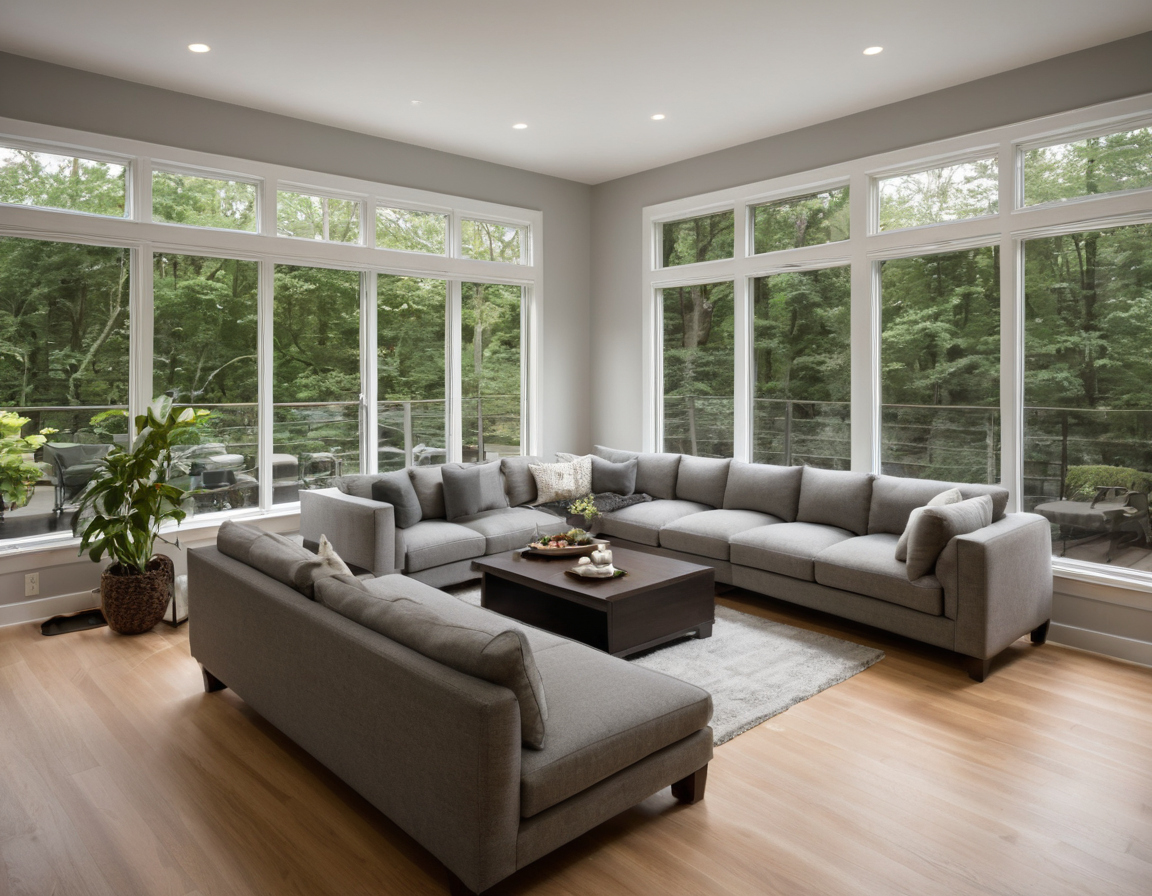
Sunroom furniture must stay clear of HVAC discharge, radiators, and heating equipment shown with finish, fixture, and clearance relationships visible.
The best sunroom furniture fix balances rearrangement, protection, and replacement cost
Begin with reversible changes, then price coverings, film, cushions, or replacement seating only after the trial layout has been used.
A sunroom protection budget should begin with reversible layout changes
Map exposure, tape footprints, move pieces, and set a shade schedule. Photograph cushion positions and sunlight boundaries, then repeat the views after two weeks. Compare like-for-like quotes by dimensions, material grade, customization, labor, shipping, warranty, region, and date.
Repairing sunroom seating makes sense when the frame and upholstery foundation remain sound
Ask an upholsterer to inspect frame joints, springs or webbing, cushion foam, seams, inserts, veneer, finish, and replacement-cover supply. The NPS Museum Handbook index separately identifies care guidance for textiles, wood, leather, and collection environments, which shows why these materials should not be judged as one assembly.
Repair when the frame and foundation remain sound, allowing for possible dye-lot differences in new covers. Replace when failed joints and upholstery foundations make repair unreasonable. The lasting change is simple: revise the exposure map seasonally before revising the room.